

How To Check Internet Log Files In Windows 7
Windows Logging Nuts
Logs are records of events that happen in your reckoner, either past a person or by a running process. They help you runway what happened and troubleshoot issues.
The Windows upshot log contains logs from the operating system and applications such as SQL Server or Cyberspace Information Services (IIS). The logs use a structured information format, making them easy to search and analyze. Some applications too write to log files in text format. For example, IIS Access Logs.
This commodity explores the Event Viewer interface and features, and introduces other major application and services logs. Examples are provided to requite y'all a total grasp of how monitoring events tin assistance you manage your systems for health and security.
Windows Upshot Logs
Windows Event Viewer displays the Windows upshot logs. Utilise this application to view and navigate the logs, search and filter particular types of logs, export logs for analysis, and more. We'll show yous how to access Windows Event Viewer and demonstrate bachelor features.
Starting Windows Effect Viewer
Windows Server 2019 Consequence Viewer tin can be accessed in several ways:
- Windows Control Panel
- Server Director
- Windows Admin Center
- Computer Management
- Component Services
- Control Prompt
Windows Control Console
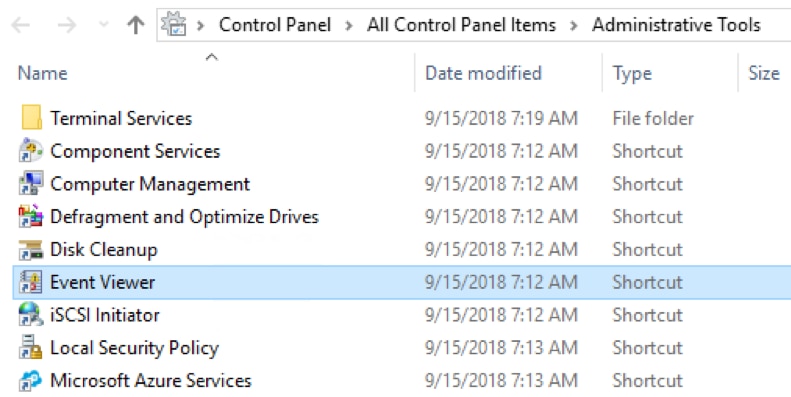
Control Panel is the standard Windows component for viewing and irresolute organization settings. It can be found in Windows Server and Windows desktop editions. To access the Event Viewer:
- Open Control Panel
- Click Administrative Tools
- Double-click Issue Viewer
Server Manager
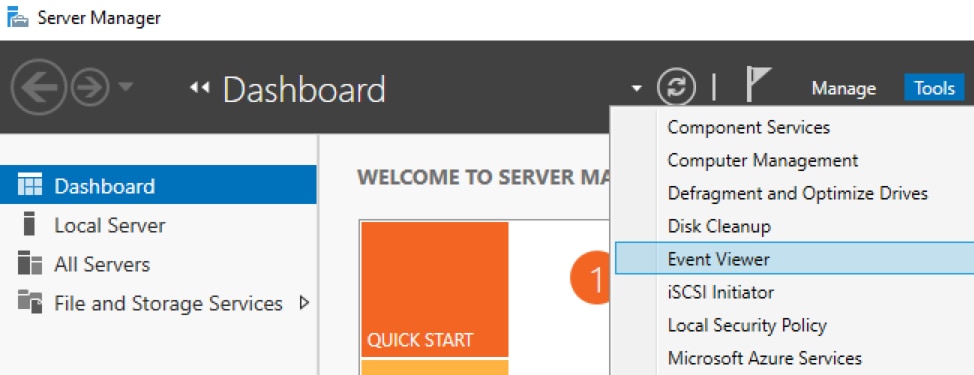
The Server Manager console lets y'all manage settings on the local server and on remote servers. To access Event Viewer from Server Managing director:
- Open up Server Manager
- Open Tools > Event Viewer
Windows Admin Middle
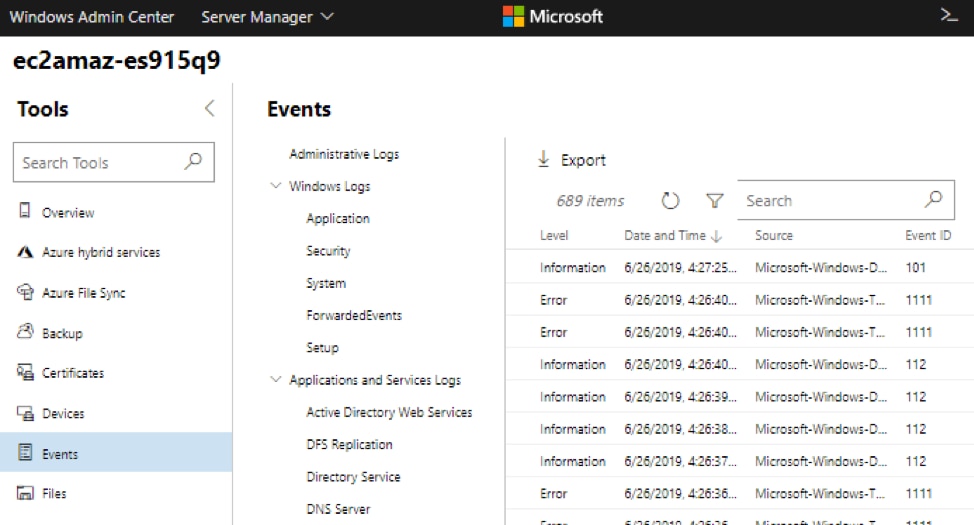
Windows Admin Center is a browser-based awarding for managing servers, clusters, desktop PCs, and other infrastructure components. To access Event Viewer from the Windows Admin Eye:
- Open up Windows Admin Middle in a supported browser.
- Click Events
Computer Management
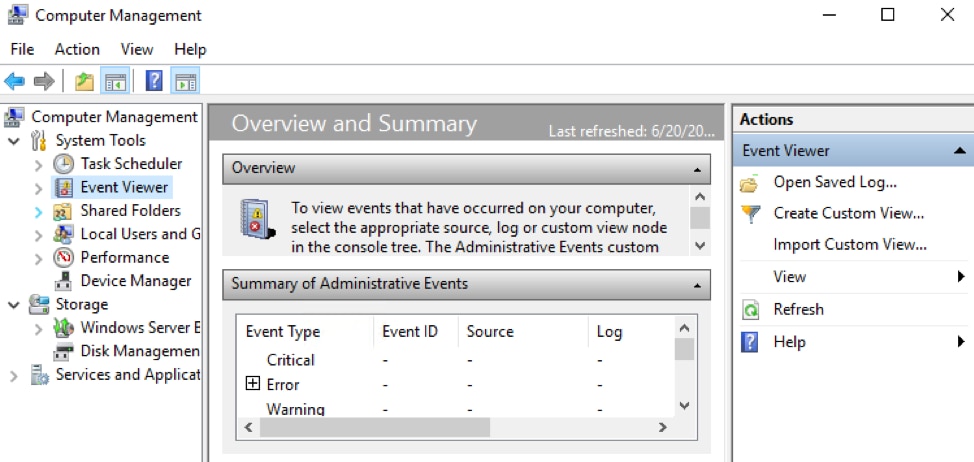
The Computer Direction console provides access to administrative tasks on a local or remote server. To open Event Viewer from Reckoner Management:
- Open Computer Management
- Click Event Viewer
Windows Component Service
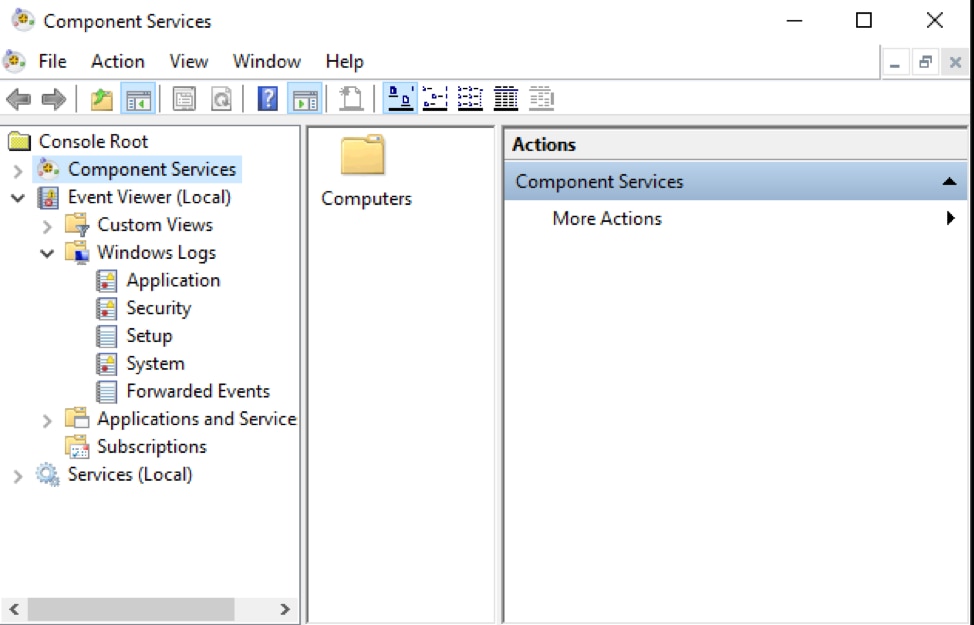
Another built-in application is the Windows Component Services Manager that enables us to configure DCOM applications running on Windows. Windows Event Viewer is attainable from Component Services Manager too:
- Open Component Services
- Click Event Viewer
Control Prompt
Lastly, you lot can open up the Event Viewer directly from a command prompt. To do so:
- Open up a Command Prompt
- Type: eventvwr
Using the Windows Event Viewer Interface
Issue Viewer has an intuitive user interface. The primary screen is divided into iii sections:
- Navigation pane
- Detail pane
- Action pane
You tin can create Summary and Custom views. Nosotros'll guide you through these options.
Navigation Pane
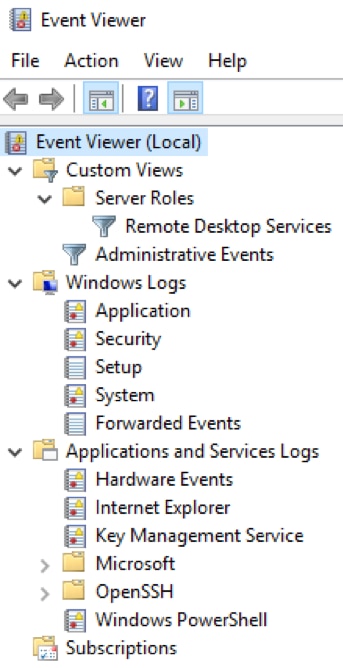
The Navigation pane is where you choose the event log to view. By default, in that location are v categories of Windows logs:
- Application – Data logged by applications hosted on the local auto.
- Security – Data related to login attempts (success and failure), elevated privileges, and other audited events.
- Setup – Messages generated when installing and upgrading the Windows operating system. If the Windows system is a domain controller, those messages are also logged here.
- System – Messages generated by the Windows operating system.
- Forwarded Events – Events forwarded past other computers when the local machine is functioning every bit a cardinal subscriber.
There is too a section for Applications and Services Logs, including categories for Hardware Events, Internet Explorer and Windows PowerShell events.
Effect Viewer Navigation pane:
Particular Pane
When Upshot Viewer is opened, the Detail pane displays the Overview and Summary. We'll discuss the Summary Views later. Select an item from the Navigation pane to run across a list of events.
Event entries are listed by default in chronological order with the latest events at the tiptop. Click on any column header to sort events by that field in ascending or descending guild. Clicking a second time in the same column head reverses the sort order. For instance, click on Level to sort by severity. A caret ^ symbol or opposite caret indicates the sort field and direction of the sort.
Each event has a severity Level:
 | Information letters indicate a successful activeness. |
 | Warning messages betoken an event occurred that might become a trouble. |
 | Error messages point a significant trouble occurred. |
 | Critical letters indicate a astringent problem occurred. |
 | Audit success is associated with security events. |
 | Audit failure is associated with security events. |
Issue Viewer Item pane showing errors and warnings:
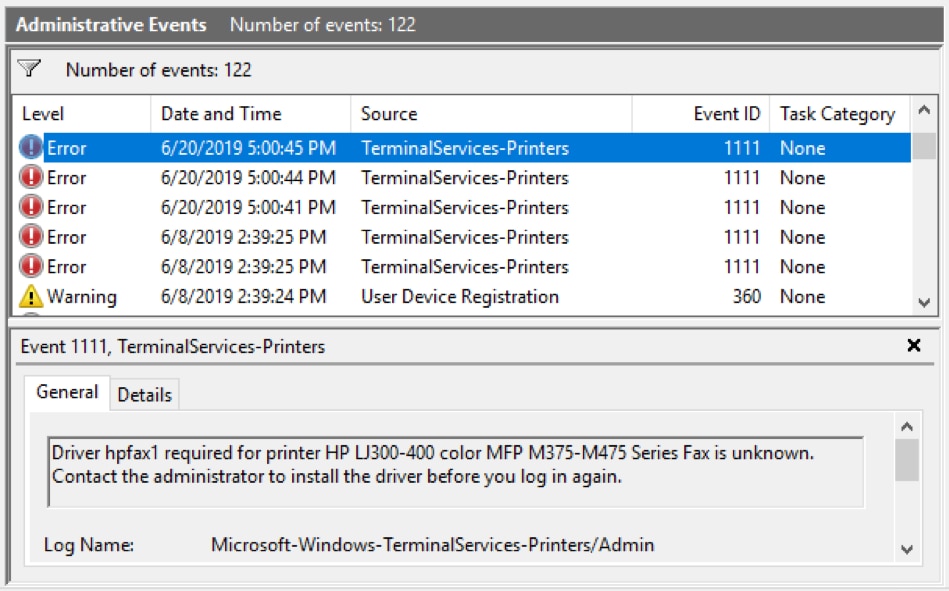
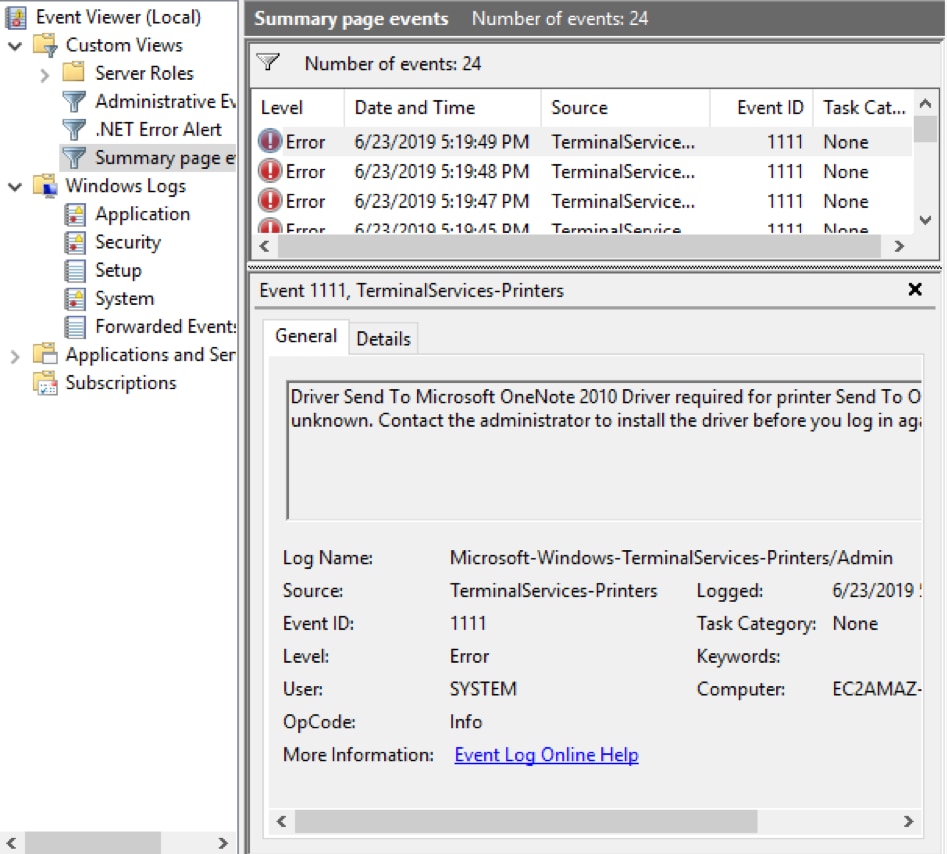
Click on an event to display the detailed information. In this example, we can come across the highlighted event's source (TerminalServices-Printers) and the date and fourth dimension it occurred. The Full general tab shows more information: a printer driver needs to exist installed.
Event Viewer Detail pane General tab:
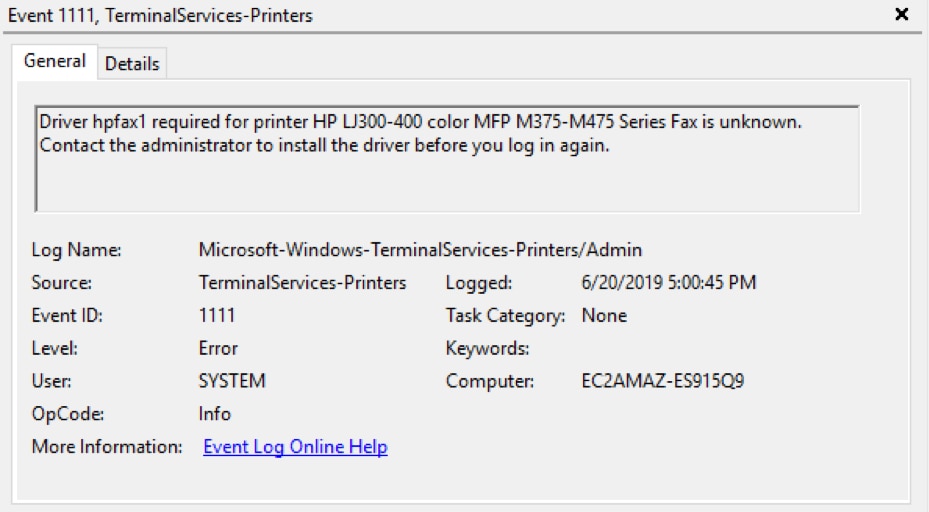
Open up the Details tab to view the raw effect data. You can switch between Friendly View and XML View.
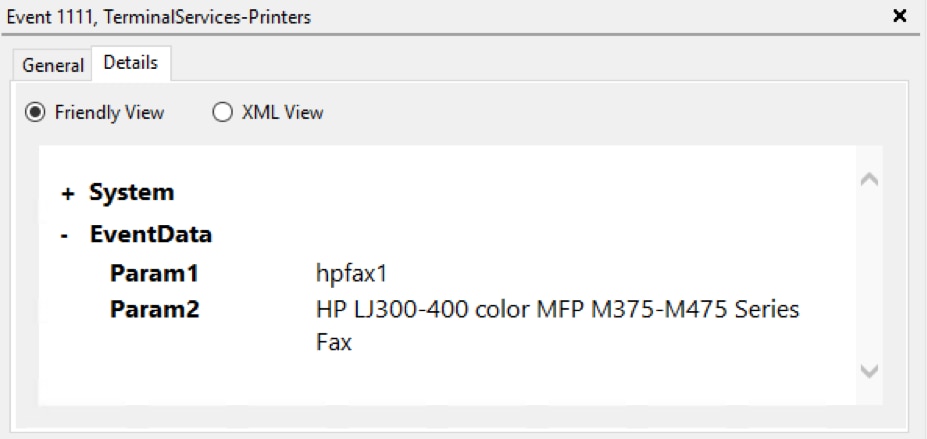
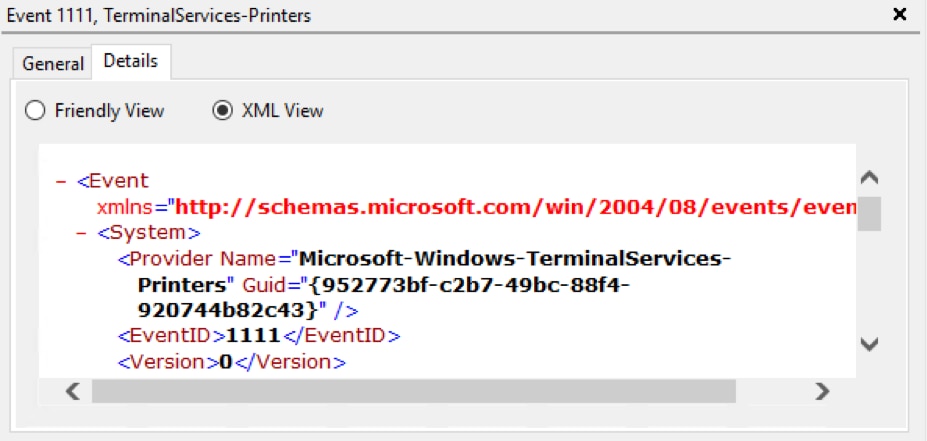
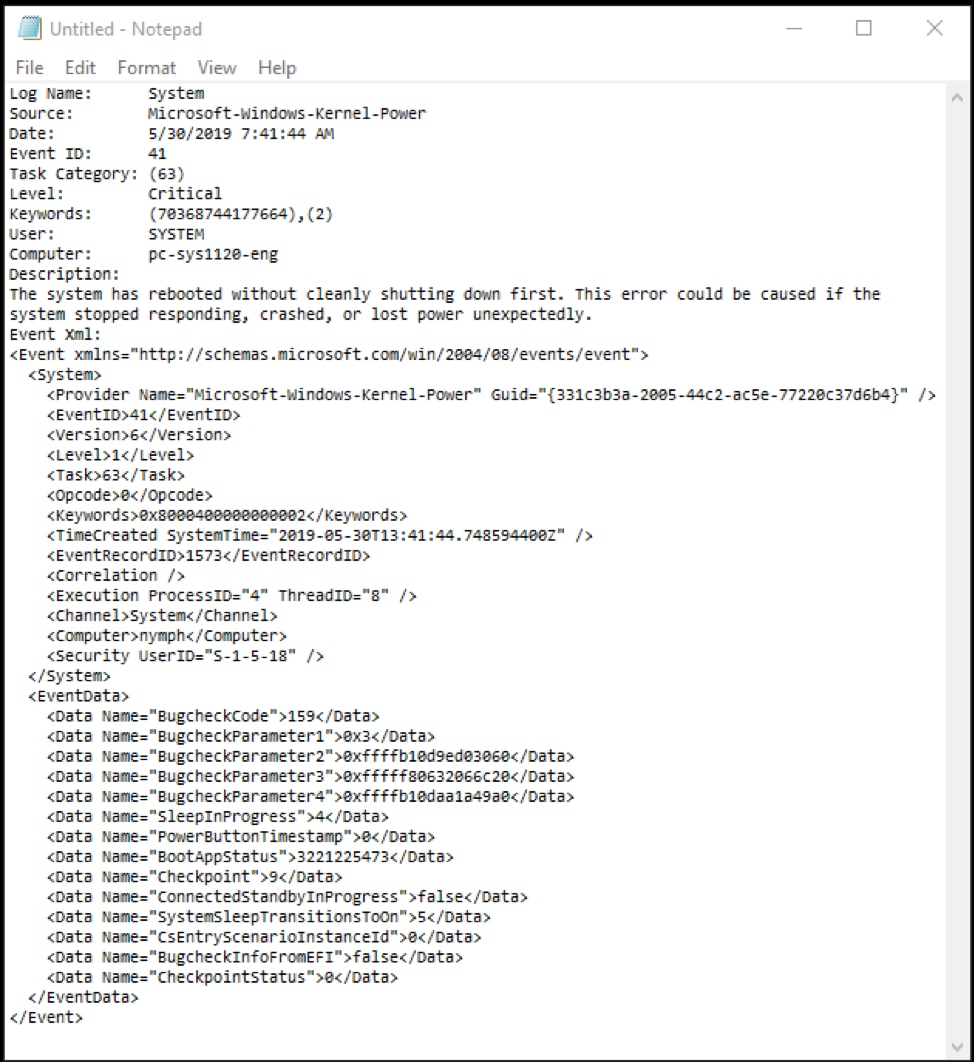
Yous can right-click on an event and select Re-create > Copy Details as Text then paste the results into a text editor. The system fields are listed, followed by the entire event as XML.
For this critical mistake, nosotros can see the system had shut down unexpectedly.
Actions Pane
The Deportment pane provides quick access to actions available for your current selections. The Activity pane is divided into 2 sections:
- Actions available for the selected Navigation pane log
- Deportment available for the selected Detail pane outcome
In this example, nosotros have selected the Awarding log and Effect 9027, Desktop Window Managing director:
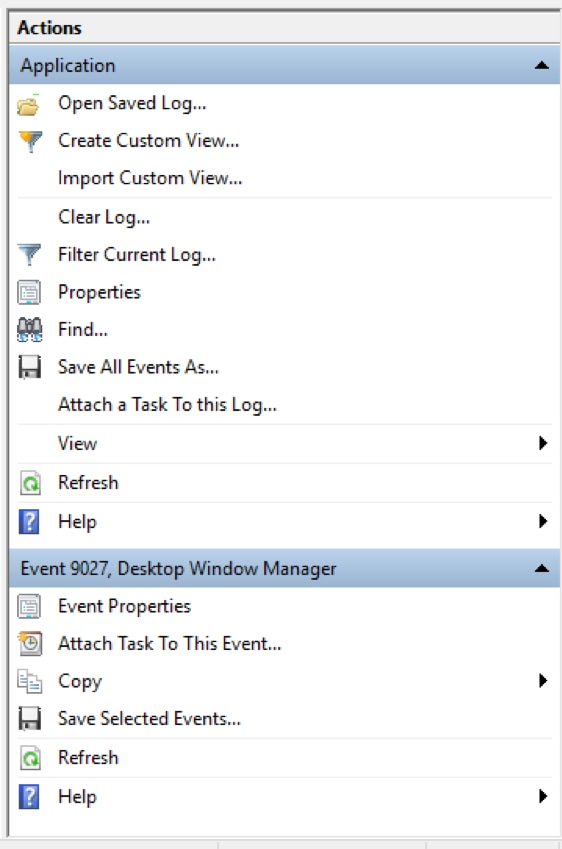
Every bit y'all tin can encounter, there are a number of actions possible when a item upshot log is active. For example, click Filter Current Log to search for a particular event or group of events. The popular-up window enables you lot to specify query criteria. When you click OK, your filtered results are shown in the Details pane.
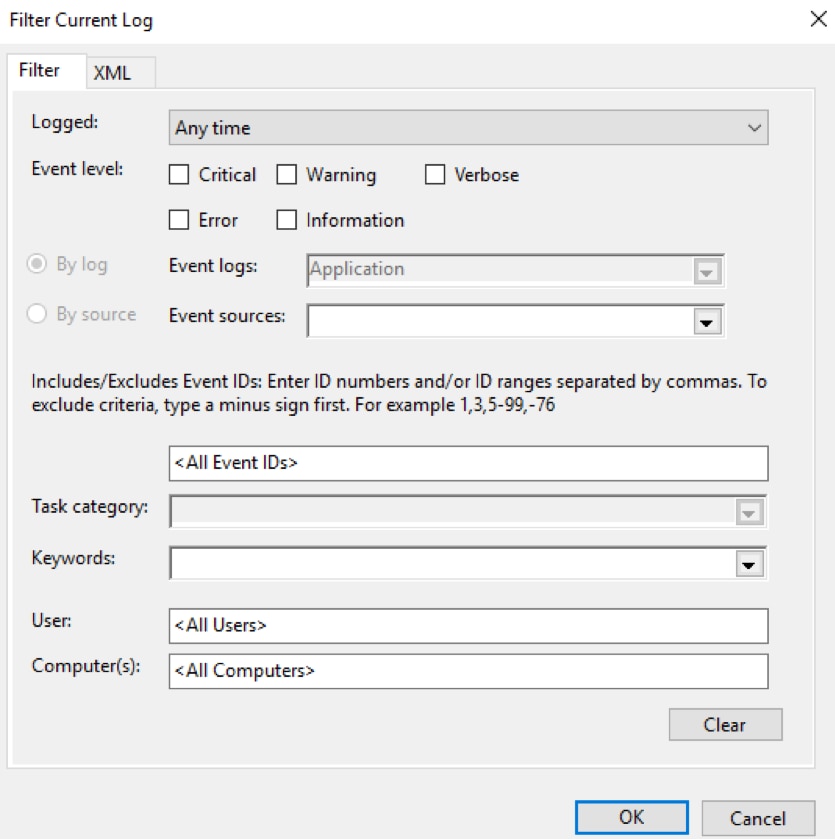
Clearing Large Logs
You lot can exercise some housekeeping on the selected log with the Clear Log action if information technology becomes too large. This deletes all events stored in the log. To check the size of your log files, select Windows Logs or Applications and Services Logs from the Navigation pane. The Number of Events and Size are shown in the Detail pane.
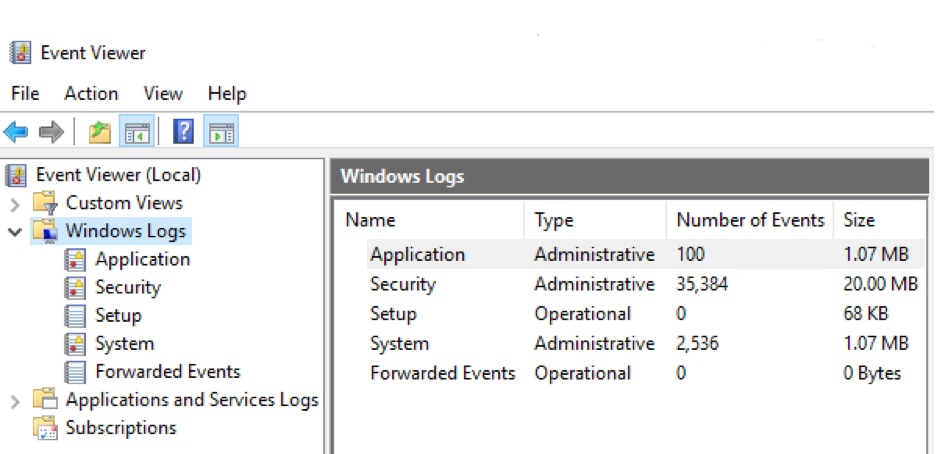
Exporting Events
You can click Save All Events Equally or Save All Events in Custom View As (selected events) or Save All Events As (all events) to export events from the current log to an result file. The upshot file has an EVTX extension.
Where would yous use such functionality? Suppose y'all want to ship your organization'southward health status to a third-party vendor—yous can provide them with an exported event file. Or, y'all can archive your logs earlier deleting them, or transport your saved logs to a centralized fill-in medium. Saving event logs to an event file comes in handy. Administrators click on Open Saved Log and navigate to the log location to open the saved log.
Custom Views
Event Viewer enables yous to easily create custom views. This provides quick admission if yous are interested in certain types of event or events based on severity level.
Create a Custom View:
- Select Custom Views in the Navigation pane.
- Click Create Custom View in the Actions pane.
- Enter the criteria for the events to be included in the Custom View. This example illustrates creating a custom view to capture Critical and Error events for the .Internet Runtime services running on the local machine.
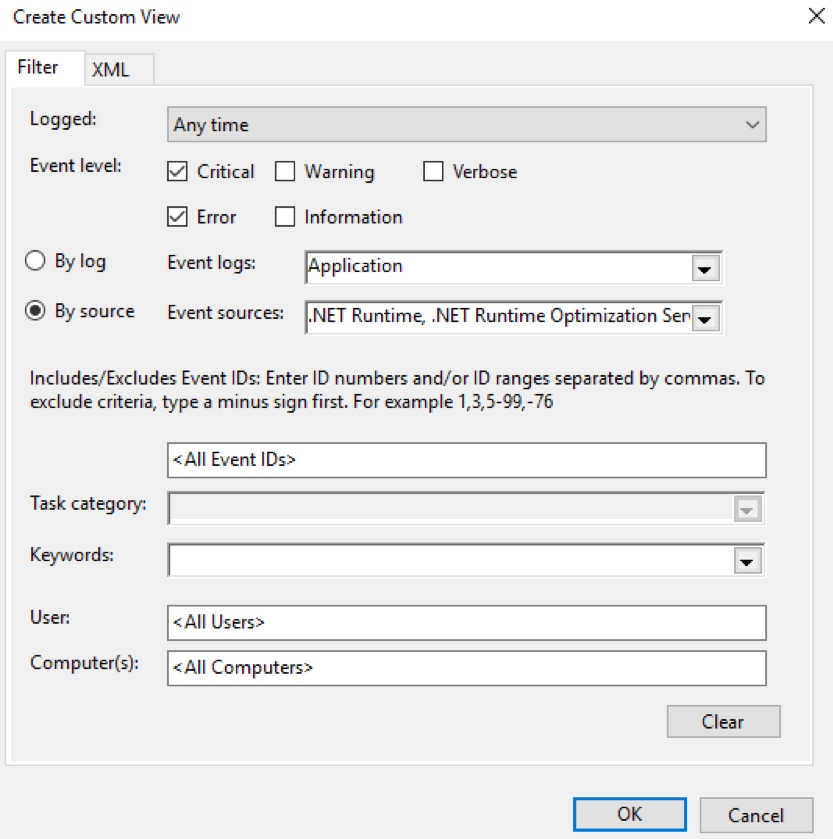
- Click OK
- Enter the Name and Description and select the location for the Custom View.
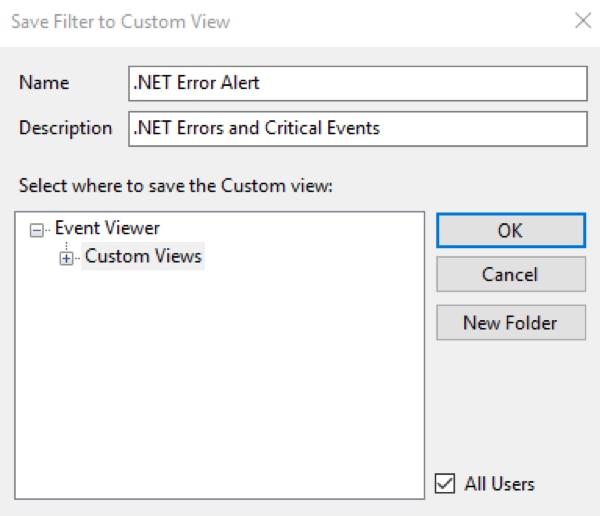
- Click OK
Your Custom View is now bachelor.
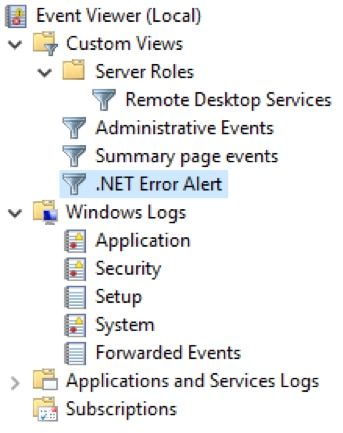
Similar to saving logs in an upshot file, you lot tin can export Custom Views.
- Select the Custom View in the Navigation pane.
- Click Export Custom View in the Actions pane.
- Enter a name for the XML file to create for the Custom View.
The XML file can be imported into Event Viewer on some other system past clicking Import Custom View and navigating to the location of the file.
Summary Views
Issue Viewer (Local) is the top node in the Navigation pane. When selected, the Overview and Summary displays in the Details pane.
- Summary of Assistants Events displays totals for all Outcome Types over the course of the week.
- Recently Viewed Nodes displays a history of the viewed nodes in chronological social club. Double-click on a node to open the location.
- Log Summary displays the major properties of each log file. Double-click to open the events for the log.
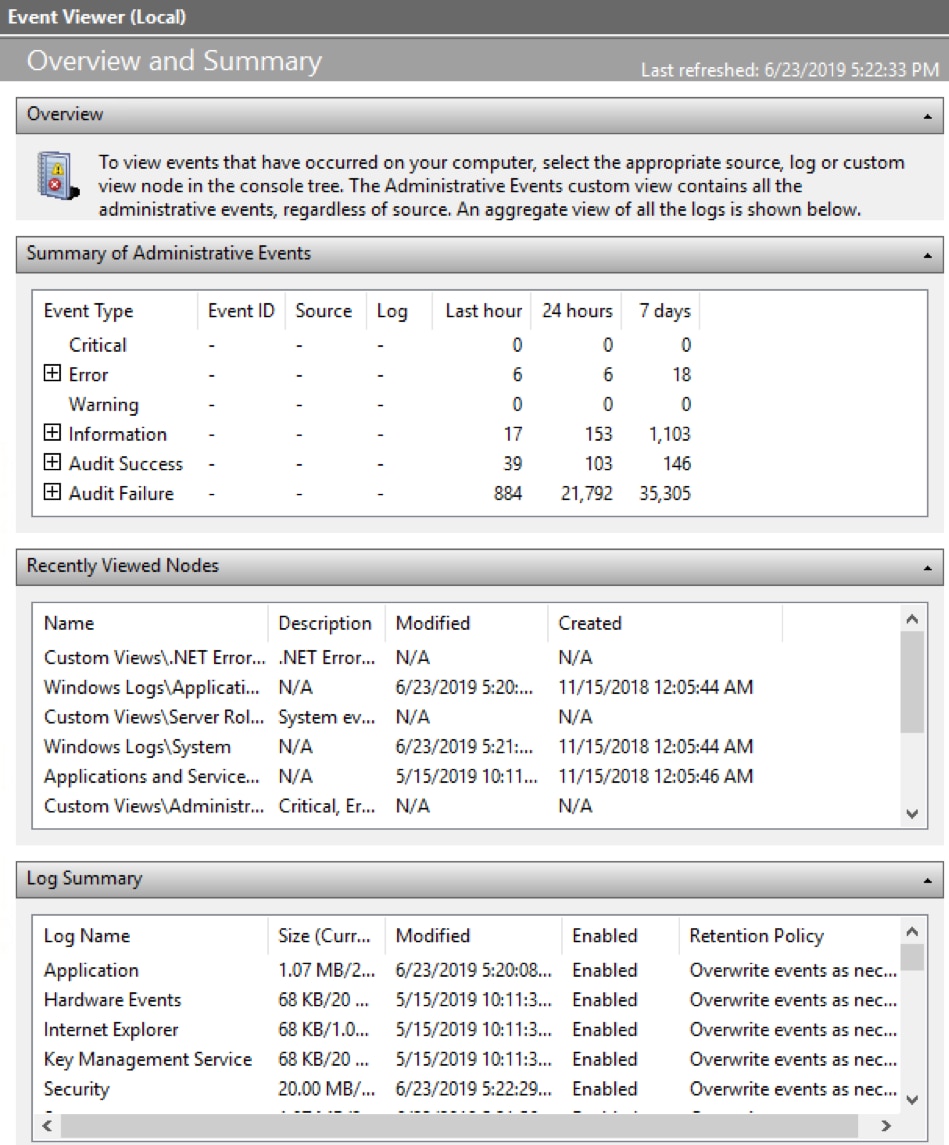
Looking at this example, there were vi errors trapped in the last 60 minutes, and the number of errors in the concluding week was eighteen. Click + to expand the Mistake listing:
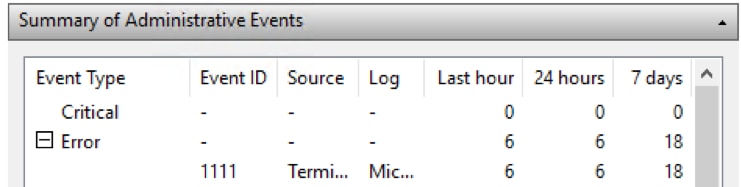
Double-click on an error to open up it in the Details pane.
Other Application Logs
There are other logs with their own outcome viewing mechanisms in Windows:
- DNS Director
- Failover Cluster Manager
- IIS Access
- Task Scheduler History
- Windows Component Service
DNS Manager
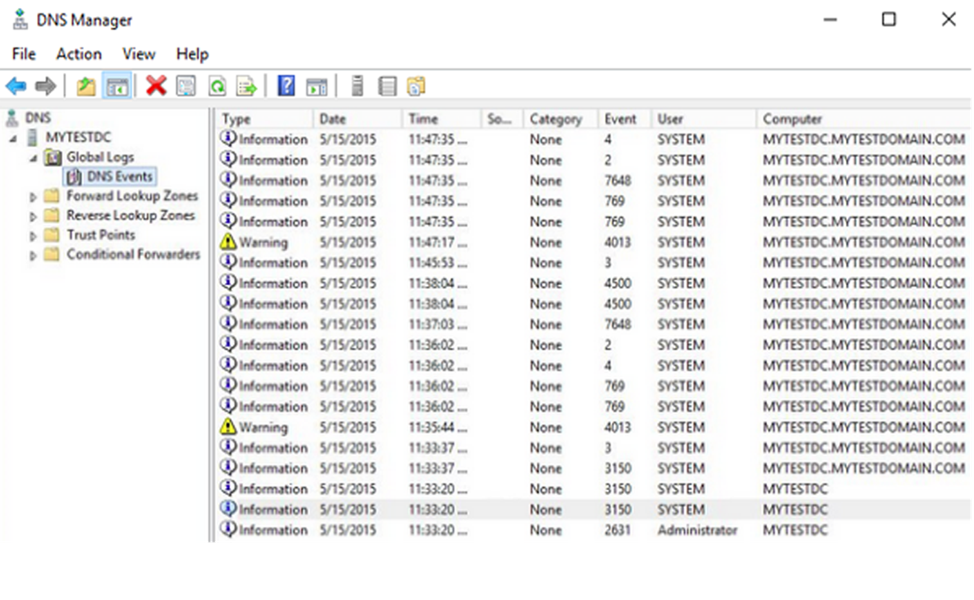
If the Windows Server is provisioned every bit a Domain Name Service (DNS) server, the DNS Director is installed. In pocket-sized networks, this is typically the Active Directory Domain Server.
DNS Managing director has its own list of events:
Failover Cluster Director
Windows Server Failover Clustering service enables two or more Windows servers to piece of work every bit a cluster—a mistake tolerant configuration where one server's physical hardware failure is automatically detected and replaced by the other server. Windows Server Failover Clustering service automatically re-routes all network traffic to the healthy instance, creating a highly available environment. In a cluster, applications connect to a common access point—a virtual IP or a cluster name—and Windows routes all traffic to the correct node. When a error does happen, applications go on to work equally usual. Windows Server Failover Clustering is used every bit the foundation of modern SQL Server HA solutions like AlwaysOn Availability Groups.
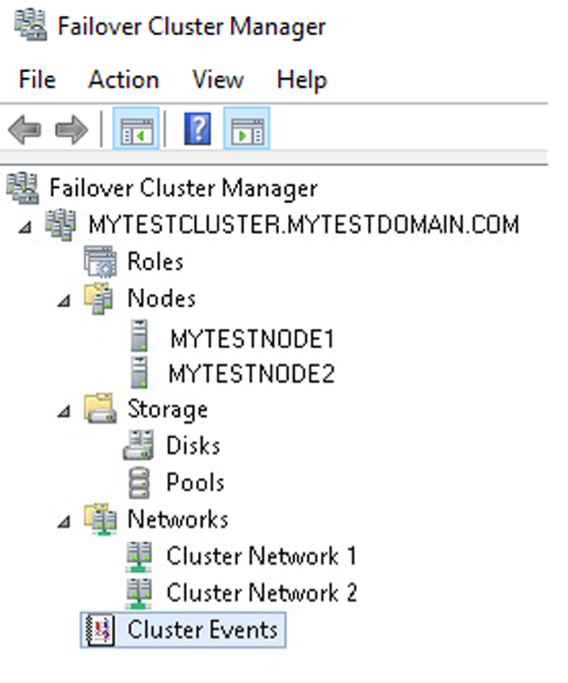
The Failover Cluster Managing director is a Windows congenital-in application with its own Outcome Viewer. Using this Event Viewer, system administrators can troubleshoot when their cluster fails or stops functioning as expected. The following screenshot shows the Cluster Manager consequence viewer node in the Navigation pane. Selecting this node will show cluster-related events.
IIS Access Logs
The Internet Information Services access logs include information about requested URIs and status indicating whether the response was successfully served. It writes these logs equally files in the W3C Extended Log Format. This format is a type of comma-separated value (CSV). The log file location is specified inside the IIS Managing director Logging settings. By default, the location is:
%SystemDrive%\inetpub\logs\LogFiles
For example, here's a log file on C:, with W3SVC1 every bit the virtual host and u_ex150428 as a file name coded with the engagement 2015-04-28:
C:\inetpub\logs\LogFiles\W3SVC1u_ex150428.log
Hither's an excerpt from the log file. The column definition is in a comment. The request for /director/html returned a 404 status code as the page doesn't exist.
#Software: Microsoft Internet Information Services 7.v #Version: 1.0 #Appointment: 2015-04-28 12:12:05 #Fields: date fourth dimension s-ip cs-method cs-uri-stalk cs-uri-query s-port cs-username c-ip 2015-04-28 02:51:38 10.211.14.109 GET /director/html - fourscore - 222.186.56.21 Mozilla/5.0+(uniform;+MSIE+ten.0;+Windows+NT+6.2;+WOW64;+Trident/6.0) - 404 0 64 4850
Task Scheduler History Logs
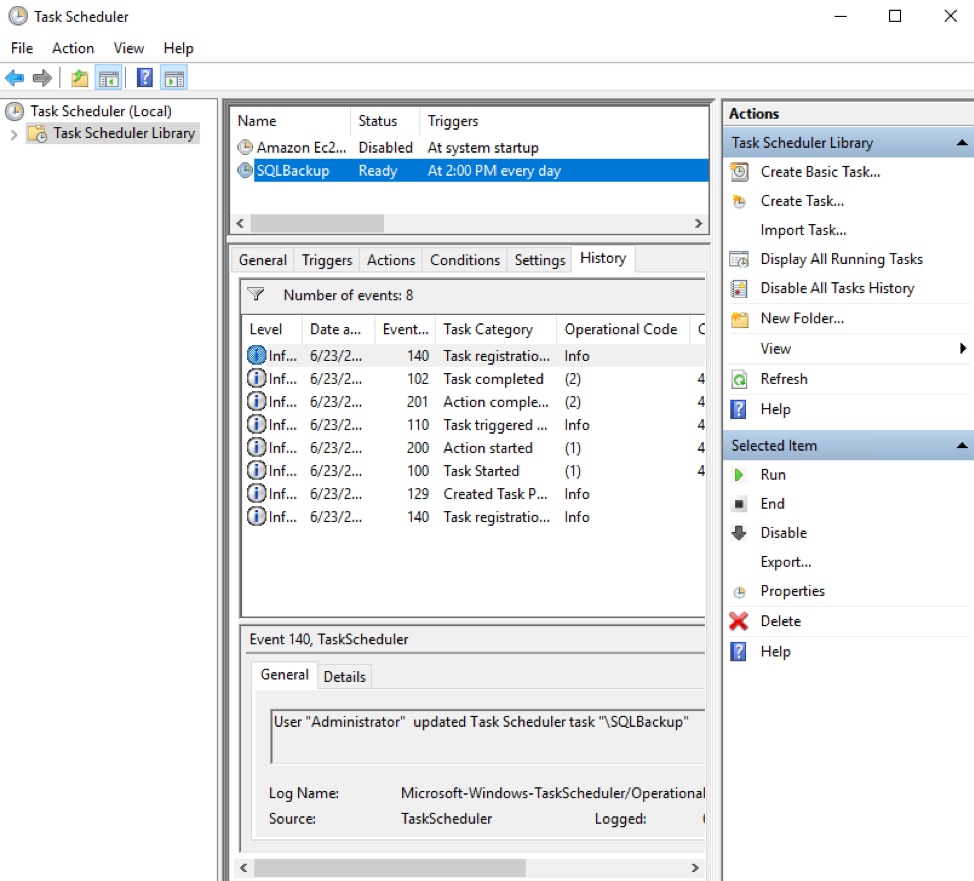
Job Scheduler runs background tasks and applications on a scheduled basis, much like the Linux cron subsystem. An case is a nightly fill-in script that backs up local SQL Server databases.
Each chore has associated history events you can view in the Task Scheduler Item pane:
In Summary
Windows and associated applications record various events in multiple logs. Trapping and understanding these events are a key part of a system ambassador'due south role. This guide explores how yous can use different methods to collect, centralize, and protect these logs.
What tools practise yous use to monitor events and system health? Add together a comment to let usa know!
Source: https://www.loggly.com/ultimate-guide/windows-logging-basics/
Posted by: maldonadosoused.blogspot.com
0 Response to "How To Check Internet Log Files In Windows 7"
Post a Comment