

How To Install A New Window
ane / 26
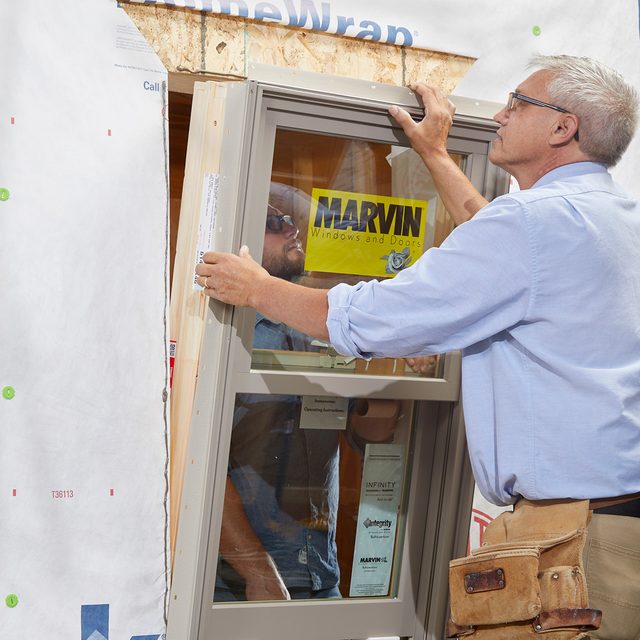
Dorsum in the day, most window installations went something similar this: Gear up, level, square, nail, spray cream, rinse, repeat. Only at that place are a few more than steps these days, and not all of them take to do with preventing water from getting inside. In fact, many mod window installation steps are designed to let water out, if information technology ever does notice a manner in.
To make certain nosotros got it right, we asked our local Tyvek rep Lori Gunderson and Marvin Window installation guru Eric Klein to walk us through the procedure. In addition to proper procedures, Eric shared a bunch of installation pro tips, hints, and tricks.
In this story we demonstrate how to install a Marvin double hung window. Many of these steps are mutual among window manufacturers, just not all of them. When installing a window, always follow the specific educational activity intended for the brand you are working with.
2 / 26
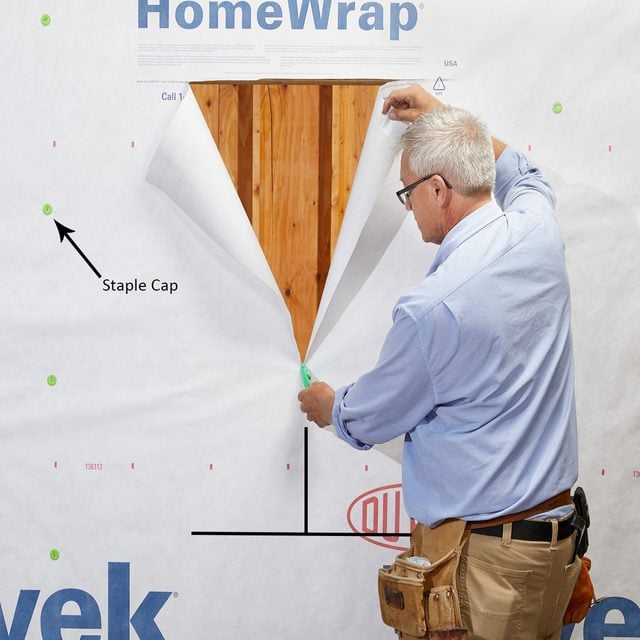
Cut Out the Opening
- Roll the house wrap, or WRB (Weather Resistant Barrier), over the entire window opening.
- Then slice down the centre of the WRB and cut it affluent at the height and bottom of the opening.
3 / 26
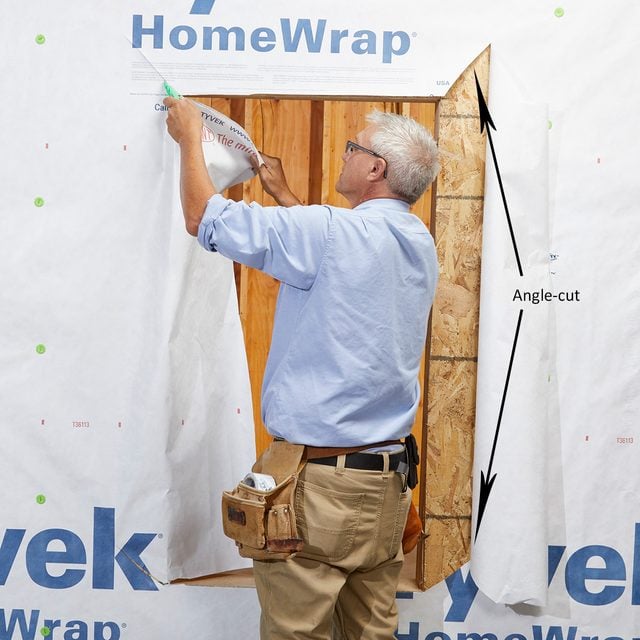
Angle-Cut the Corners
- Cut at an angle almost 6-in. upwardly and abroad from all 4 corners.
- Note: The bottom angle cuts are not required by all window manufacturers.
4 / 26
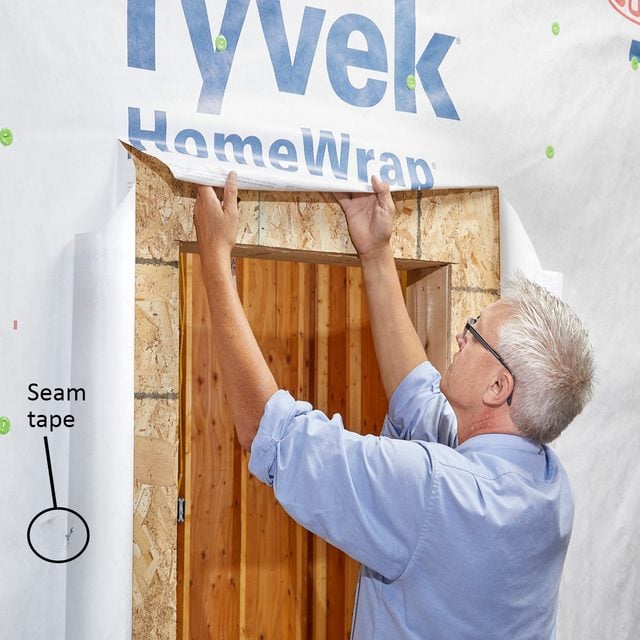
Fold Back the Flaps
- Fold back the side-flaps and concur them in place temporarily with seam seal or firm wrap tape, not staples.
- Pro Tip: Utilise a small piece of record so information technology doesn't tear the WRB when it'southward removed.
- Patch any tears that do occur with seam seal record. If there are no fasteners in the way, fold the WRB back under itself.
5 / 26
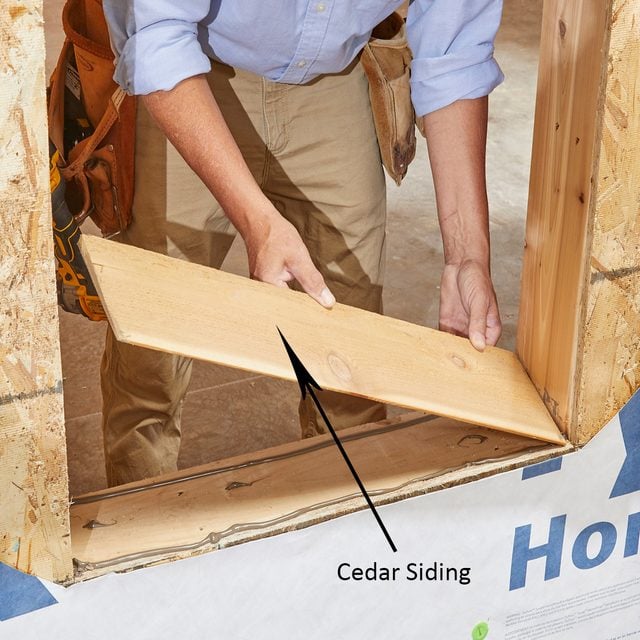
Slope the Sill With Siding
Fifty-fifty with a perfect install, water can still find its way into the opening. Information technology's a expert idea to slope the sill in the rough opening to help unwanted water detect its style out again. Achieve the slope past ripping downward and installing a beveled piece of conditions resistant siding.
- Plan ahead and build the crude openings about 1/2-in. taller to account for the width of the siding.
- Shim under the siding if the opening is super out of level, merely avoid raising the window higher than other windows nearby. The difference in height will be noticeable and unsightly.
vi / 26
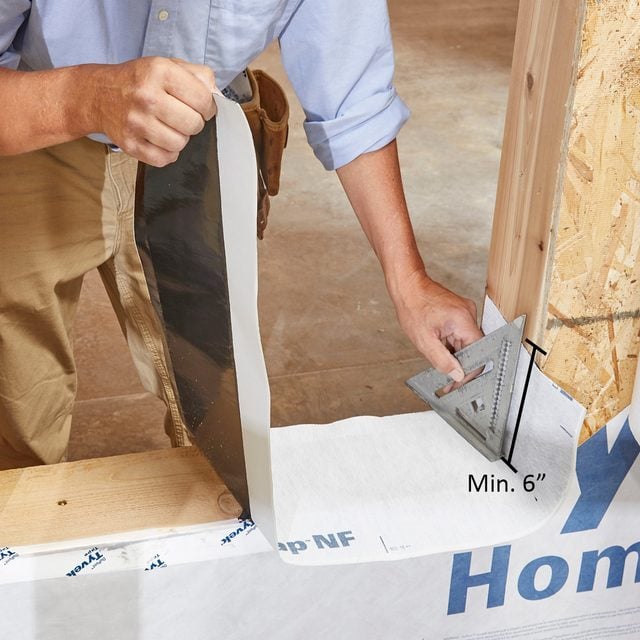
Install the Sill Pan Flashing
We're installing Dupont FlexWrap on this window. At that place are other acceptable products on the marketplace, but FlexWrap has a bang-up runway record and is recommended past the folks at Marvin.
- Tear the 6-in. backing off the flashing tape and lay the tape downwardly over the sill flush with the interior framing.
- Run the tape a minimum of vi inches up the sides of the opening.
- Pro Tip: Eric pushes the record tight into the corners with a speed or rafter square.
7 / 26
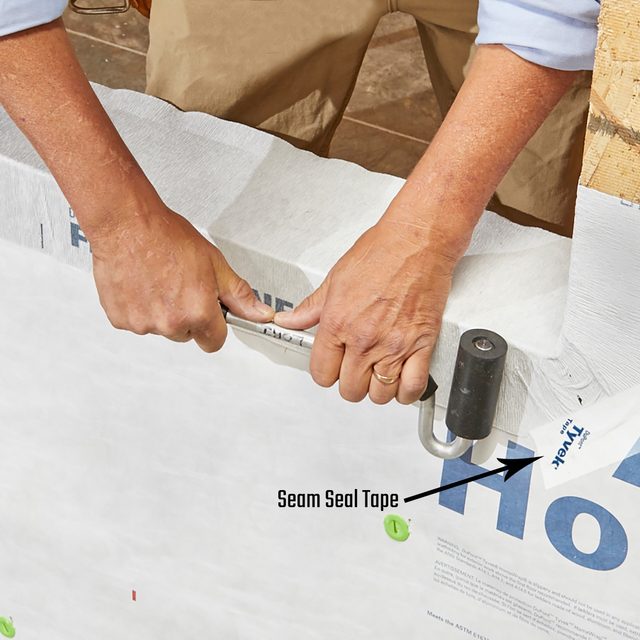
Coil Out the Flashing
- Remove the smaller strip of backing and push the tape downwardly onto the wall. This flashing is pressure sensitive and needs to be pressed in place with a roller.
-
- Pro Tip: On super cold days the stretched corners of the FlexWrap tin can curl dorsum simply a fleck. Concord them down in identify with a strip of seam seal record.
-
8 / 26
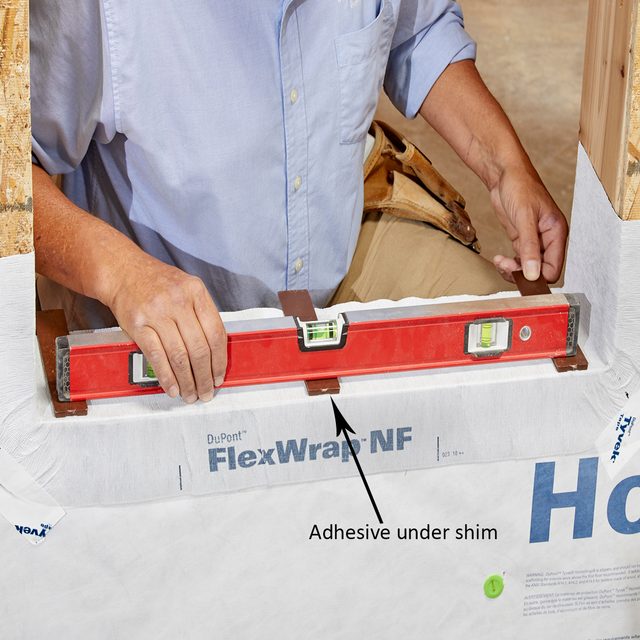
Install Shims on the Sill
-
- Gear up the lower shims (preferably blended) in identify earlier setting the window.
- Pro Tip: Eric dabs a little sealant under the shims. That helps continue them in place when setting the window only keeps them loose enough, so they can be moved for modest adjustments later.
- Space the shims near the edges, in the center, and for larger windows one no more than xiv-in. apart.
- Gear up the lower shims (preferably blended) in identify earlier setting the window.
nine / 26
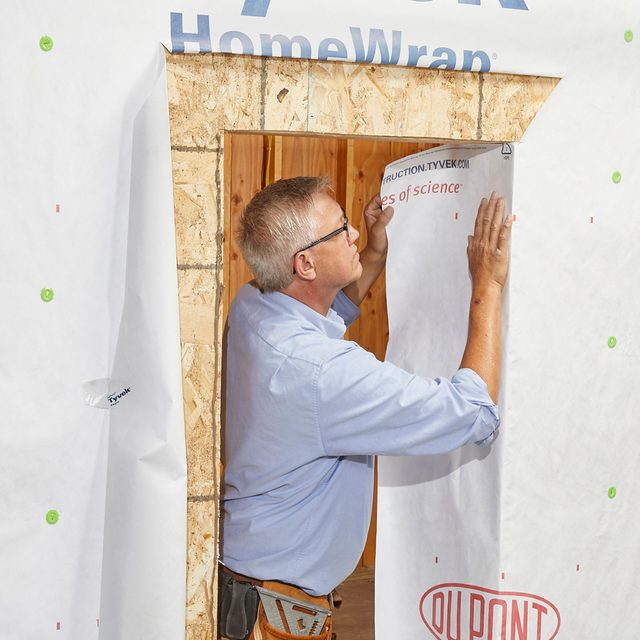
Fold in Sides
- Wrap the two side WRB flaps inside, around, and on to the within framing.
- Staple or tape it in place.
ten / 26
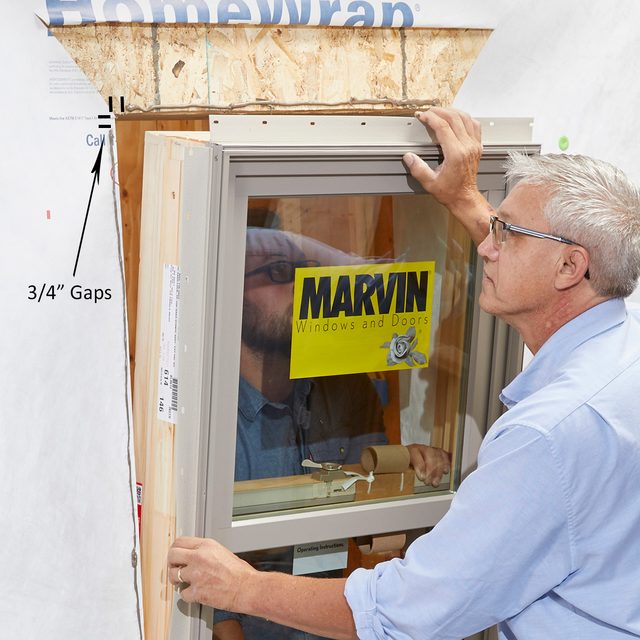
Seal the Sides and Top Earlier Setting the Window
-
- Run a 3/8-in. dewdrop of sealant about i-half inch in from the border of the opening.
- Get out a 3/4-in. gap on each side of all 4 corners. Leaving the corners costless of caulk ensures the corner gaskets take a clean, smooth surface to adhere to.
- Don't caulk under the bottom nailing flange. Most exterior grade "Window, Door, and Siding" sealant will work.
11 / 26
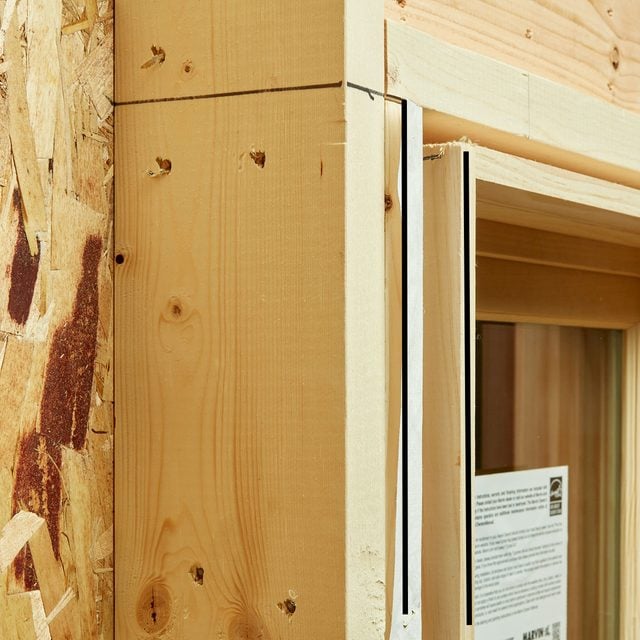
Marshal the Inside of the Window
There is no reason to plumb the window because if the wall is out of plumb, then goes the window. Just practise the trim carpenters a favor and double check that the window jambs are every bit fifty-fifty with the framing as possible. If one side of the window protrudes in further than another, installing casing tin can be a hard proposition. But make minor adjustments. Over-twisting the window could cause the sashes to jam or stick instead of operating smoothly.
12 / 26
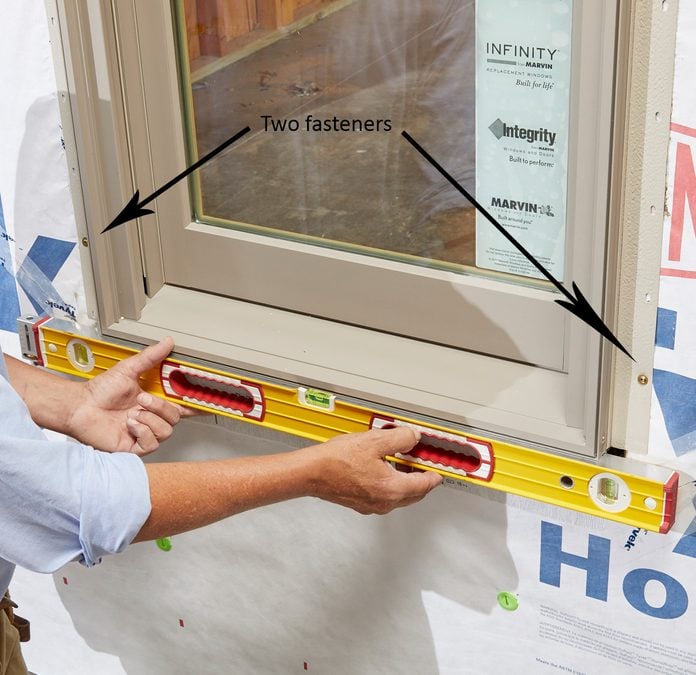
Level and Fasten the Bottom
- Have a helper on the inside center the window in the opening.
- Adjust the shims so that the bottom of the window is level and so that each one is in contact with the window.
- Install ii two-in. exterior grade fasteners on each side about the bottom of the window, and so bank check the bottom again with a level.
- Pro Tip: Eric prefers screws to nails because it's easier to readjust the window if something gets out of whack. GRK cabinet screws are his favorite.
13 / 26
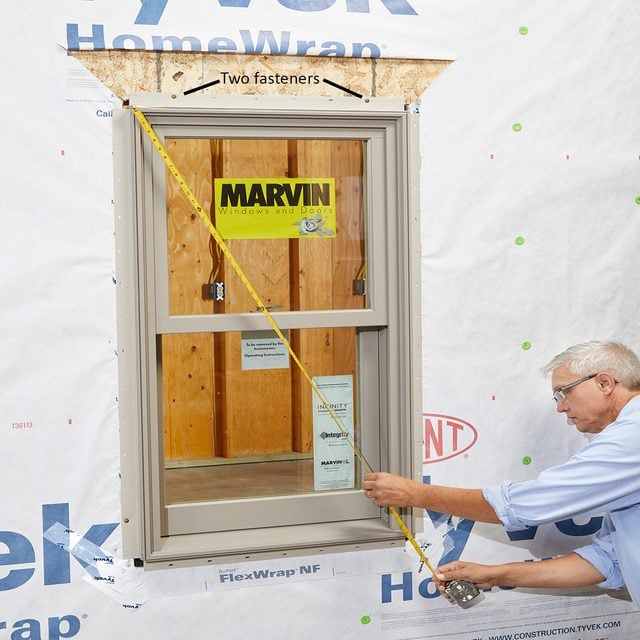
Square and Fasten the Top
- Check that the window is foursquare by measuring diagonally both ways.
- Accommodate the top of the window 1 fashion or the other until the measurements are the same.
- Pro Tip: To ensure an accurate measurement, always hooks the tape under the vinyl drip cap. The drip cap also helps concur his tape measure in place.
- Install two fasteners at the height near the corner, and then check for square again.
- Don't install whatsoever more than fasteners until the window is shimmed and sealed on the inside.
fourteen / 26
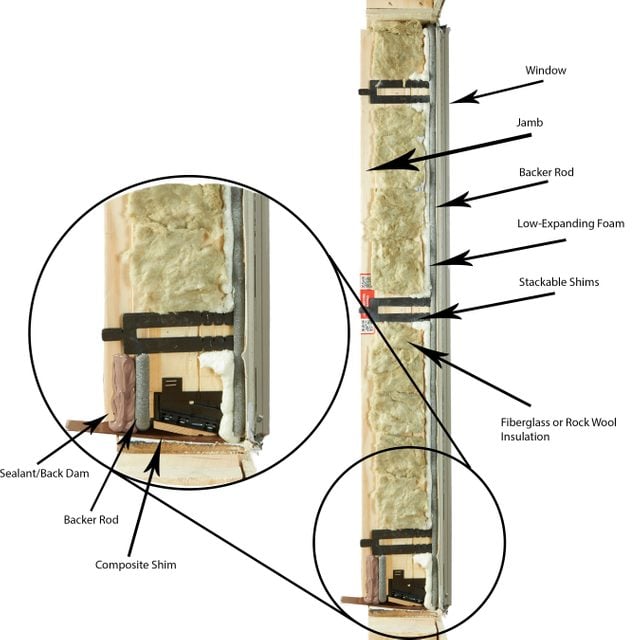
Seal upwards the Inside
This adjacent section volition walk you through the process of sealing around the window. Pictured above is what information technology should expect like when you lot are all done. Notation: Again, this is an approved method for installing Marvin windows. Other manufacturer's methods will vary.
15 / 26
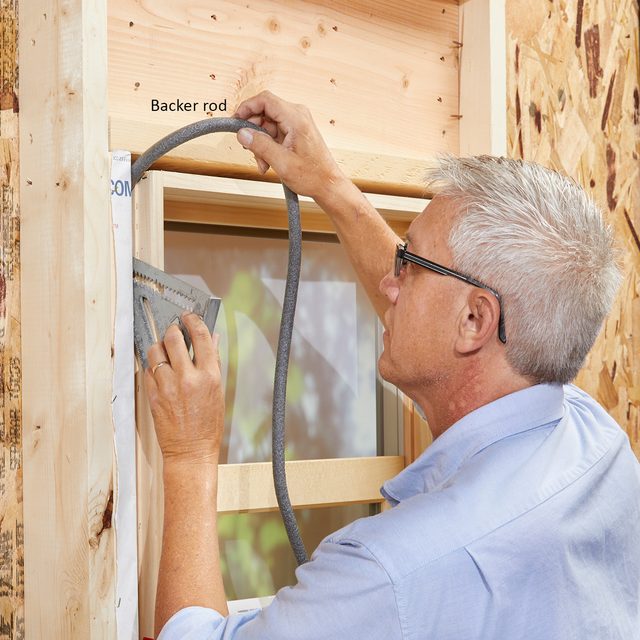
Install Backer Rod on the Sides and Top
-
- Earlier installing whatsoever more than shims insert a backer rod on both sides and the top, but not the bottom.
- Push the backer rod tight up against the back of the nailing flange.
- Pro Tip: Eric uses his speed/rafter foursquare to make several passes pushing in simply a couple inches at a fourth dimension.
- The idea behind this capitalist rod is to eliminate thermal bridging and water infiltration. It prevents the side shims from butting upwards against the nailing flange, which could channel heat and water.
xvi / 26
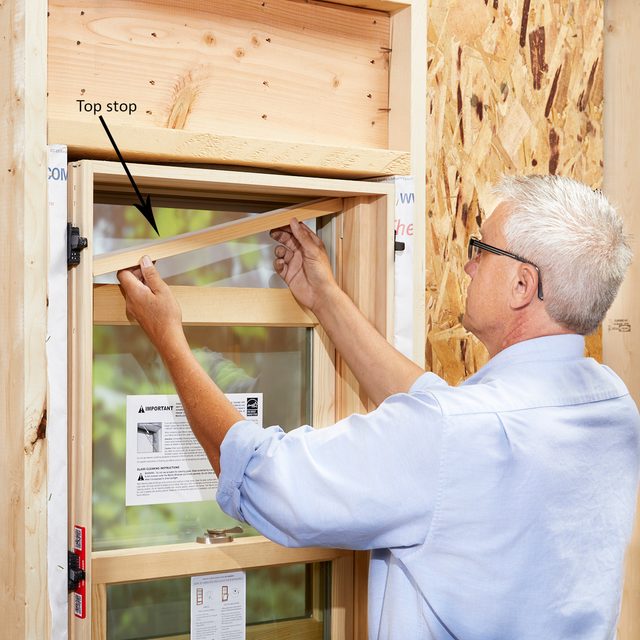
Straighten the Jambs
At that place are three ways to check that the jambs are straight before installing the side shims:
- Audit the reveals (space) betwixt the jambs and the sashes. They should be even.
- The altitude betwixt the ii side jambs should be equal at the top, center, and bottom. This can be checked merely by measuring. PRO TIP: Instead of measuring, Eric uses the top stop every bit a story pole and compares the gaps between the cease and the jamb at the top, lesser, and heart. Create your own story pole if the window yous're installing does non take a meridian stop, and you have a bunch of them to install.
- Open up and shut both sashes to ensure they operate smoothly.
17 / 26
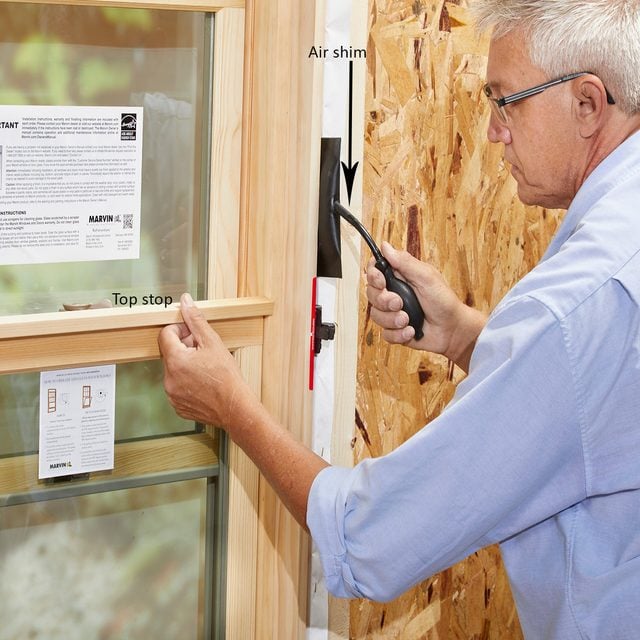
Install the Side Shims
- Install shims on the sides of the window in the middle, and most iv inches down from the top and up from the lesser.
- Some windows have dedicated holes to spike the jambs to the framing (see side by side page). Place shims in those locations.
- Ofttimes, the heart of the side jambs will accept to be pushed in a bit.
- Pro Tip : Eric nudges the jambs over with an Air Shim purse to the exact position he wants, and then installs the shims.
- Don't shim the top of the window. If the building settles, the window could get compressed, which will probable cause the window to terminate working properly and could even result in broken panes of glass.
18 / 26
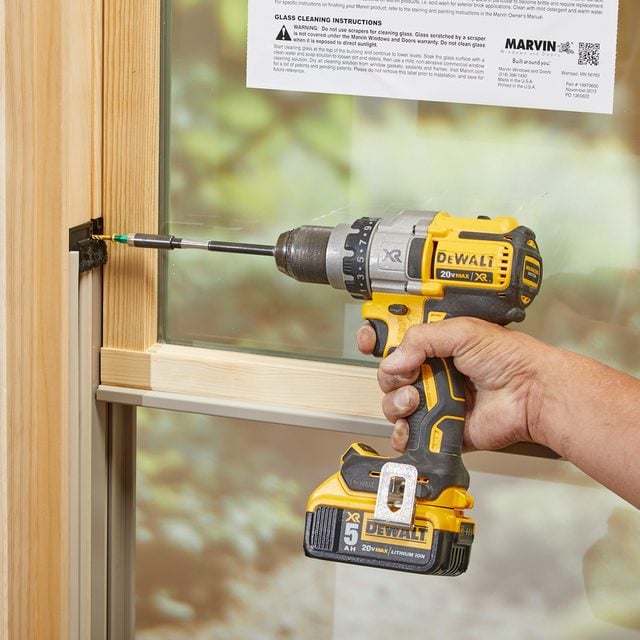
Install the Inside Screws
In improver to the fasteners in the nailing flange, this window is held in place with screws run through a bracket chosen the receiver block. It's located in the checkrail and tin can be accessed by removing the lower sash. The shims should be located at these locations.
-
- Pro Tip: A long bid holder will arrive easier to avoid scuffing the window with the drill chuck.
nineteen / 26
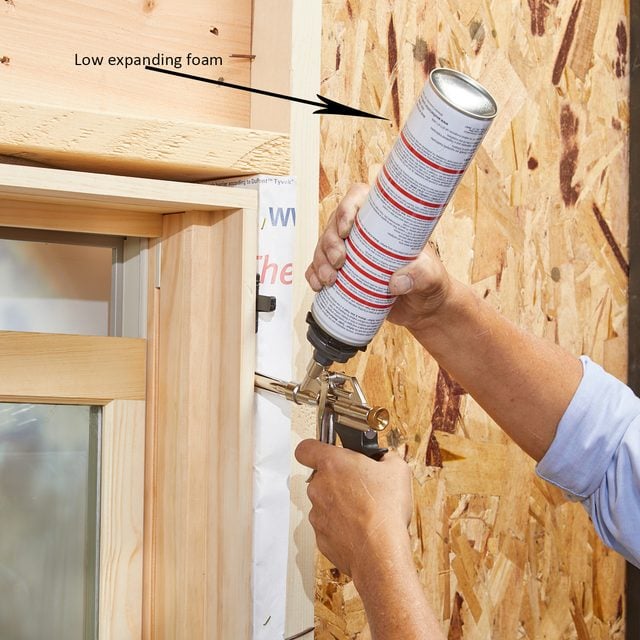
Foam the Sides and Pinnacle
- Run a bead of low-expanding cream in the gap forth side the backer rod. Don't over do information technology. Just dispense plenty foam to create a 1 or 1-one/ii-in. bead that bridges the entire gap between the window and the framing.
- Run the bead out a footling ways forth each side of the shim. Don't fill the whole space in considering even low-expanding foam can expand plenty to distort the jambs.
- Pro Tip: Lay out a practice bead on a piece of cardboard, so you can adjust the gun, and guess how fast to move the tip forth within the gap.
20 / 26
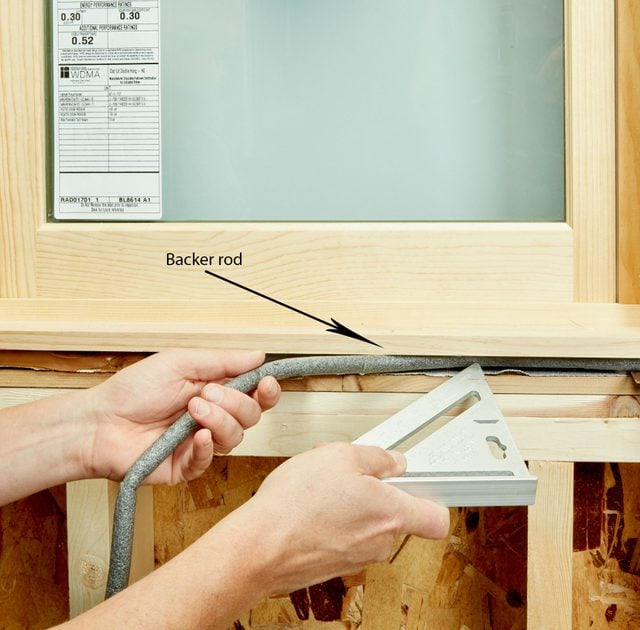
Install the Bottom Backer Rod
- Starting at one of the lower shims, push in a backer rod effectually the bottom and up to the other shim.
- Don't push it all the way in like y'all did with the other backer rod. Just push button in most to the point where the jamb meets the window unit of measurement.
21 / 26
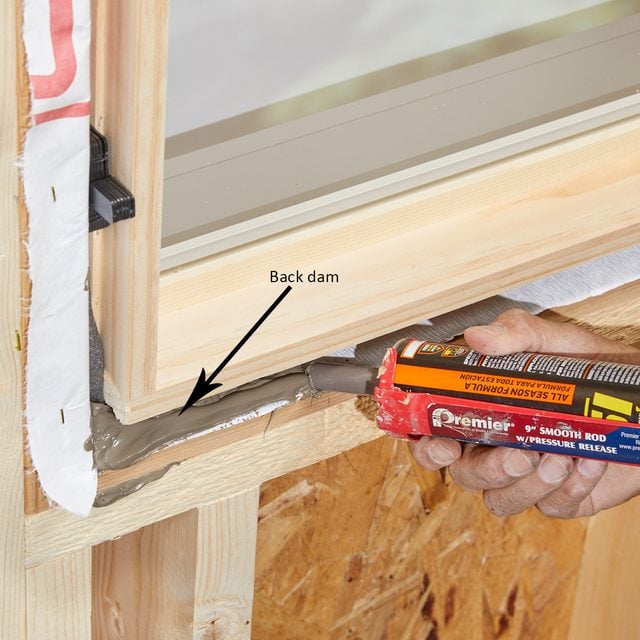
Create a Back Dam
- Fill the gap from the lower backer rod nigh all the style to the inside edge of the framing.
- Tool in the sealant with your finger or a pocket-sized chunk of capitalist rod to ensure that the whole gap gets filled. This back dam will prevent any water that gets past the other lines of defense from getting inside the house.
- If the window is installed properly there should exist nothing stopping the water from escaping back to the slap-up outdoors.
22 / 26
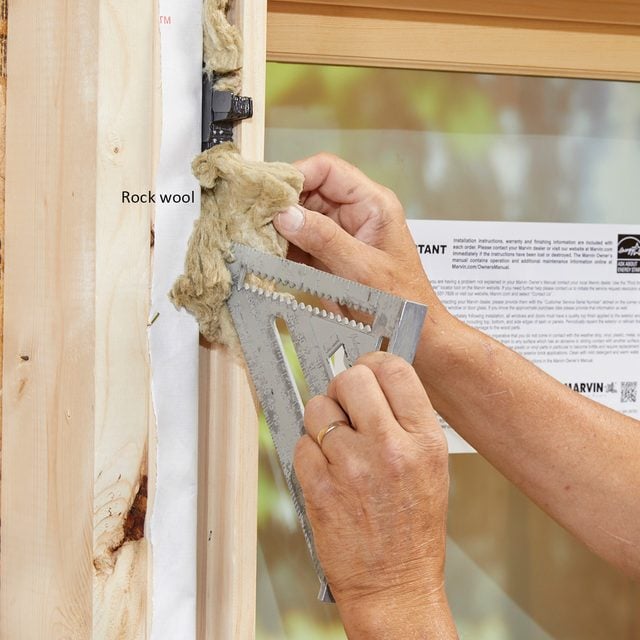
Add together Insulation
- Fill up in the rest of the gap on the sides (in a higher place the lower shims) and the top with fiberglass or rock wool insulation.
- Fill the whole gap, but keep information technology loose and fluffy. Insulation loses its effectiveness the more than tightly packed it gets.
23 / 26
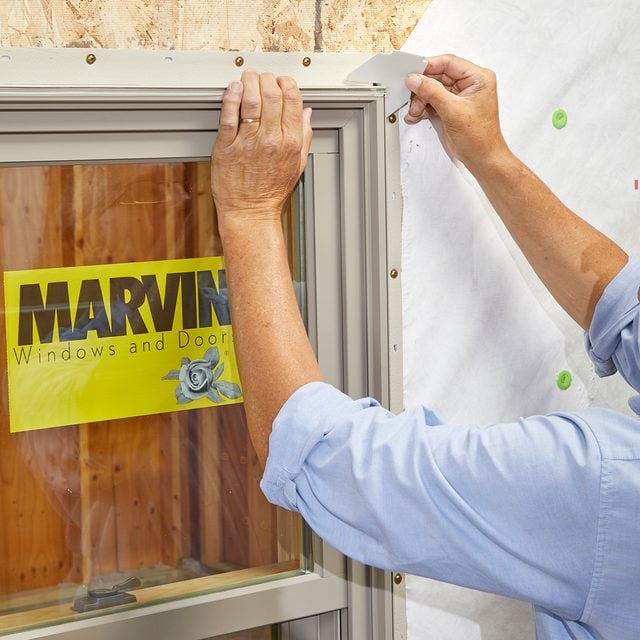
Add Corner Gaskets
- If the window you're installing requires corner gaskets, at present's the time to install them.
24 / 26
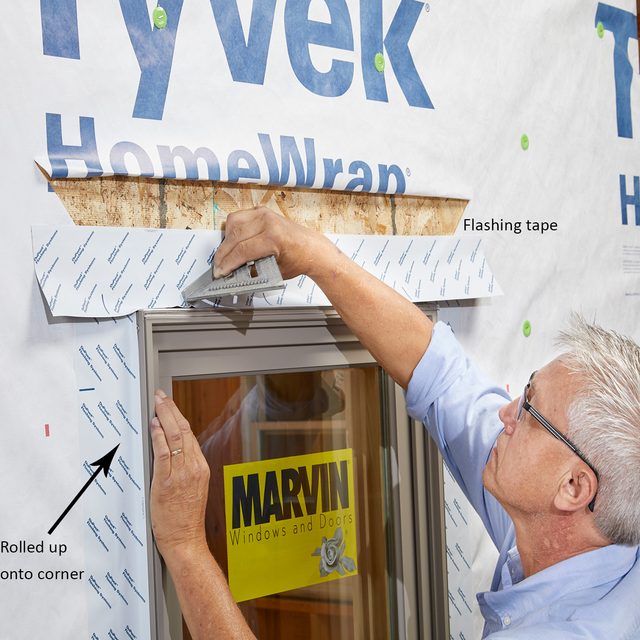
Tape the Flanges
Some windows take a nailing flange that is an integral part of the window (commonly vinyl windows), but this window does non. So in order to seal the expanse where the flange meets the window, the flashing tape needs to be run upward onto the side of the window at least one/iv-in.
- Install the tape on the sides start, about four inches past the lesser of the window and about an inch higher than the upper nailing flange.
- Run the flashing tape at the meridian at least six inches past the window on each side.
25 / 26
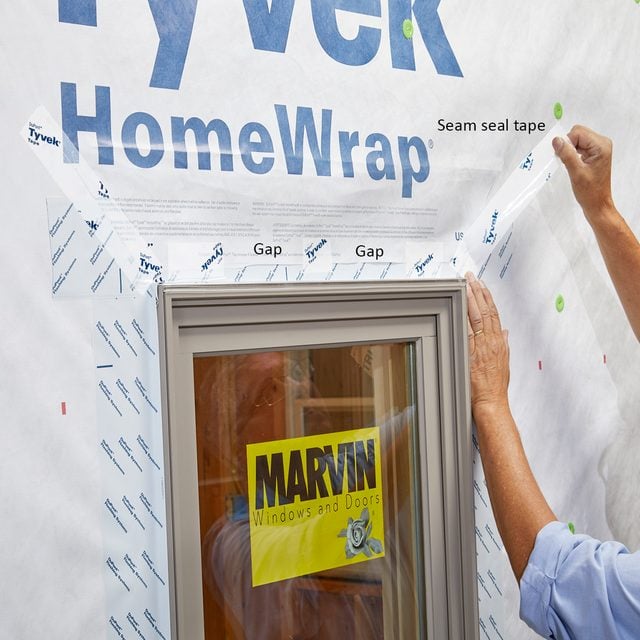
Tape the Meridian Flap
- Fold downwards the superlative flap of WRB and cover the two angled cuts with seam seal record.
- Don't tape the entire bottom of the flap. Instead, just employ a few small-scale strips of tape to hold it in place. The gaps between the tape are there to create an escape route for any water that gets behind the WRB above the window opening.
26 / 26

Done!
That's all at that place is too information technology! Okay, we admit that window installation is not every bit simple and like shooting fish in a barrel as used to be…merely neither are h2o damage and callbacks. We want to thank our 2 experts for stopping by and walking us through the entire process:
Encounter the experts
Lori Gunderson
Lori has been a Tyvek Specialist for over 12 years. She works closely with Architects, General Contractors, Builders, and installers to aid build a quality, energy efficient building. Before becoming a Tyvek Specialist, she worked for a national builder for over x years where she managed unmarried family and multifamily projects.
Eric Klein, Senior Installation and Service Instructor
Eric has been employed past Marvin Windows and Doors since March of 1984 and has trained thousands of installers in the facilities at Warroad, MN and on his travels that have taken him beyond the globe. He is an Accredited Instructor and certifies installers in the Residential, Light Commercial, and Commercial window and door installation. Eric also works with several assembly and vendors on how to better serve the installers, contractors, and service techs with better tips and tricks, and installation knowhow.
More resources:
http://www.dupont.com/products-and-services/fabrics-fibers-nonwovens/protective-fabrics/brands/tyvek.html
https://www.marvin.com/

How To Install A New Window,
Source: https://www.familyhandyman.com/list/window-installation-the-right-way/
Posted by: maldonadosoused.blogspot.com
0 Response to "How To Install A New Window"
Post a Comment